
Beginner's Guide to Lighting a Rental Apartment Without Wiring Changes
A rental apartment's lighting is usually someone else's decision. One flush-mount fixture in the middle of the ceiling, a cool-white bulb that turns the walls gray, and a switch that offers exactly two options: on or off. You can't rewire it and you probably can't replace the fixture. That doesn't mean you have to live in a room that feels like a waiting area.
Everything below works from a standard outlet. No electrician, no permits, no wall surgery — and nothing you can't undo in an afternoon before the walkthrough.
Think in Layers, Not in Fixtures
Most rental lighting fails because it comes from a single source at a single height. One bright point in the middle of the ceiling flattens the whole room: no shadow, no depth, no place for the eye to rest. The fix isn't a brighter bulb. It's light at three heights.
- Overhead — general illumination for cleaning, cooking, finding your keys.
- Eye level — lamps, sconces and low-hung pendants that light faces and create pools of warmth where people actually sit.
- Floor level — uplighters and arc lamps that wash walls and soften dark corners.
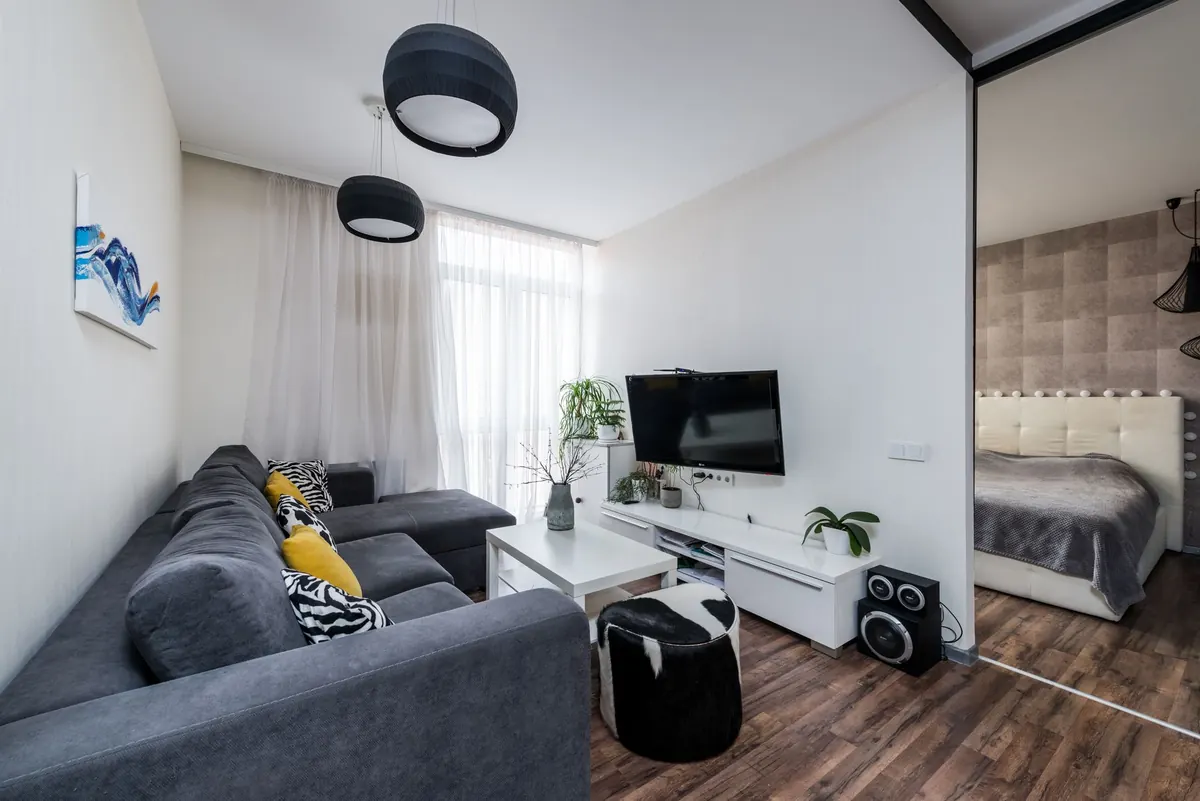
In a small living room, two or three warm sources at different heights will do more than any single upgrade. Once you have layers, you can switch the overhead off in the evening entirely and the room still works.
Plug-In Pendants: The Ceiling Light You Can Actually Change
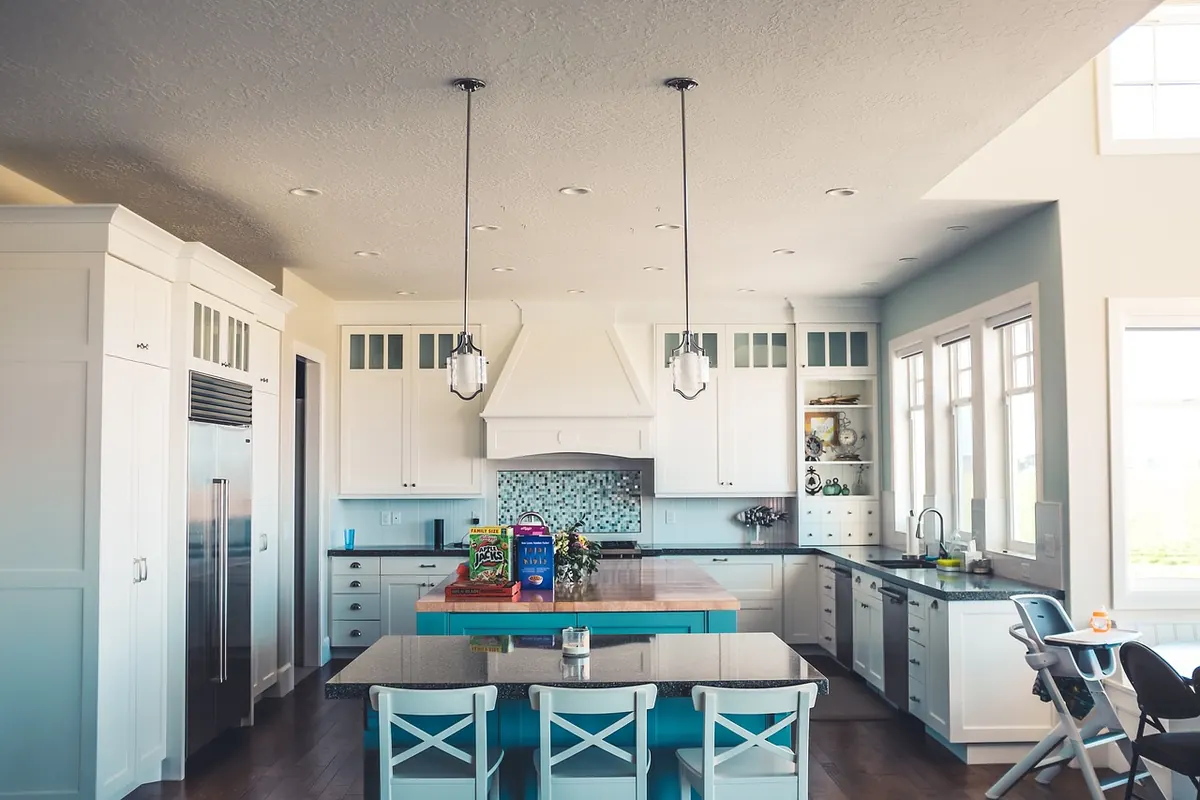
A plug-in pendant is a shade on a fabric or cloth-covered cord, with a plug at one end and usually an inline switch. You plug it into an outlet, route the cord up the wall and across the ceiling, and hang the shade wherever you need it: over a dining table, above a kitchen counter, beside a reading chair.
Before you order, measure the route you plan to run the cord — up the wall, across the ceiling, down to the shade. Add a little slack, then buy a cord longer than that number. Undersized cords are the most common mistake here.
What you'll need
- A ceiling hook rated well above the pendant's weight, or a removable adhesive hook for very light shades.
- Cord clips or a slim cord raceway that matches your ceiling color.
- An inline switch, a smart plug, or a remote so you're not crawling behind furniture to turn it on.
- A dimmable warm LED bulb — 2700K to 3000K — sized for the shade.
Run the cord along the ceiling trim or in a straight line to the nearest corner rather than diagonally across the room. Straight reads as intentional; diagonal reads as an accident. Keep the cord slightly taut between clips so it doesn't sag into loops.
If your plan involves a small swag hook, check your lease first. Many leases allow small picture-hook-sized holes, but "many" isn't "yours." A dot of spackle and touch-up paint covers it at move-out. Heavy shades need a hook anchored into a joist; if you're not confident about finding one, a handyman can do this in under an hour.
Battery Sconces: Best Where Cords Would Be Ugly
Battery-powered sconces mount with a screw or an adhesive plate and run on rechargeable batteries or disposables. They're ideal where a cord would look wrong: flanking the bed, framing a bathroom mirror, lighting a hallway or stairwell wall. In pairs, they give a room instant symmetry.
Be realistic about output. Most battery sconces are mood and accent lighting, not task lighting — they won't replace a reading lamp. Mount them with the center around eye level so the light falls on the wall, not into your eyes, and keep their color temperature consistent with the rest of the room. Rechargeable models cost more upfront and far less over a year.
The same category covers the small stuff: adhesive puck lights inside dark closets, strip lights under a kitchen cabinet, and battery picture lights over art. Each one solves a specific dark spot without a single wire.
Floor Lamps Do the Heavy Lifting
A floor lamp requires no installation at all, and that's its superpower. You can move it when the furniture moves, take it to the next apartment, and never explain it to a landlord.
Four types earn their space:
- Arc lamps reach over a sofa or dining table, putting light where a ceiling fixture never lands.
- Uplighters throw light at the ceiling, which bounces back as soft, even general light — especially good with high ceilings and dark corners.
- Tripod or column lamps with a linen drum shade give warm, diffuse light at eye level.
- Swing-arm lamps are the one type worth buying for reading. Position the shade just below seated eye level so it lights the page, not your face.
Glare is what makes a lamp feel cheap. If you can see the bulb from where you sit, move the lamp, lower the shade, or switch to a bulb with a frosted finish.
Quick Wins: Bulbs, Dimmers, Smart Plugs
Before buying a single fixture, change the bulbs. Cool white output in the 4000K range reads as office or garage; warm light in the 2700K to 3000K range makes wood, fabric and skin look better. Match temperatures within a room — mixing warm and cool bulbs is the fastest way to make a space feel unfinished.
Then reclaim control. Plug-in dimmers and smart plugs let you dim a lamp or turn off every light in the apartment from the couch instead of walking a circuit. Put a small table lamp on the kitchen counter or entry console so those spaces have a low, warm option after dark. And try an evening with the overhead switch taped off: lamps only. Most people never go back.
Keep the Cords From Ruining the Room
Cords are the visible tax on renter-friendly lighting. Paintable cord raceways run along a wall and disappear once they match it. Adhesive clips every foot or so hold a pendant cord straight. Tuck lamp cords along the baseboard and behind furniture rather than across an open floor.
Two safety notes worth taking seriously: avoid running cords under rugs or through doorways where they get pinched, and don't chain multiple extension cords or overload a single outlet. If your lighting plan needs more power than the room's outlets can reasonably supply, bring in an electrician to assess it.
A Weekend Plan That Actually Gets Done
Start in one room — the living room usually gives the biggest return. At dusk, turn on the lights you have and note where the room feels dark or harsh. Swap every bulb in that room to warm, matching color temperature. Add two floor lamps: an uplighter in the darkest corner and a reading lamp beside your main seat. Hang one plug-in pendant over the table or counter where you eat. If the bedroom still feels flat, mount battery sconces on either side of the bed. Finish by hiding the cords.
That's an evening's work and a modest budget, and nothing that follows you out the door when the lease ends. Rentals are temporary. Bad lighting doesn't have to be.
Photo: Max Vakhtbovych / Pexels