
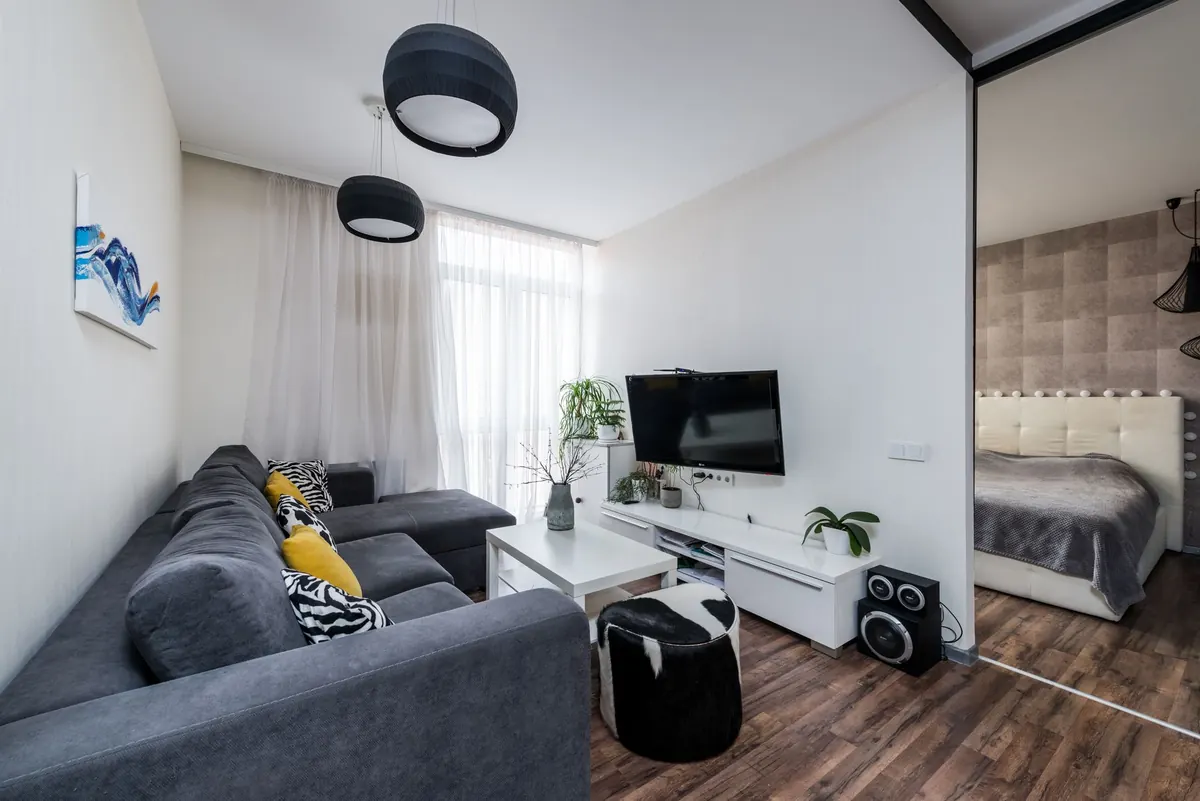


Explained: The Difference Between Task, Ambient, and Accent Lighting
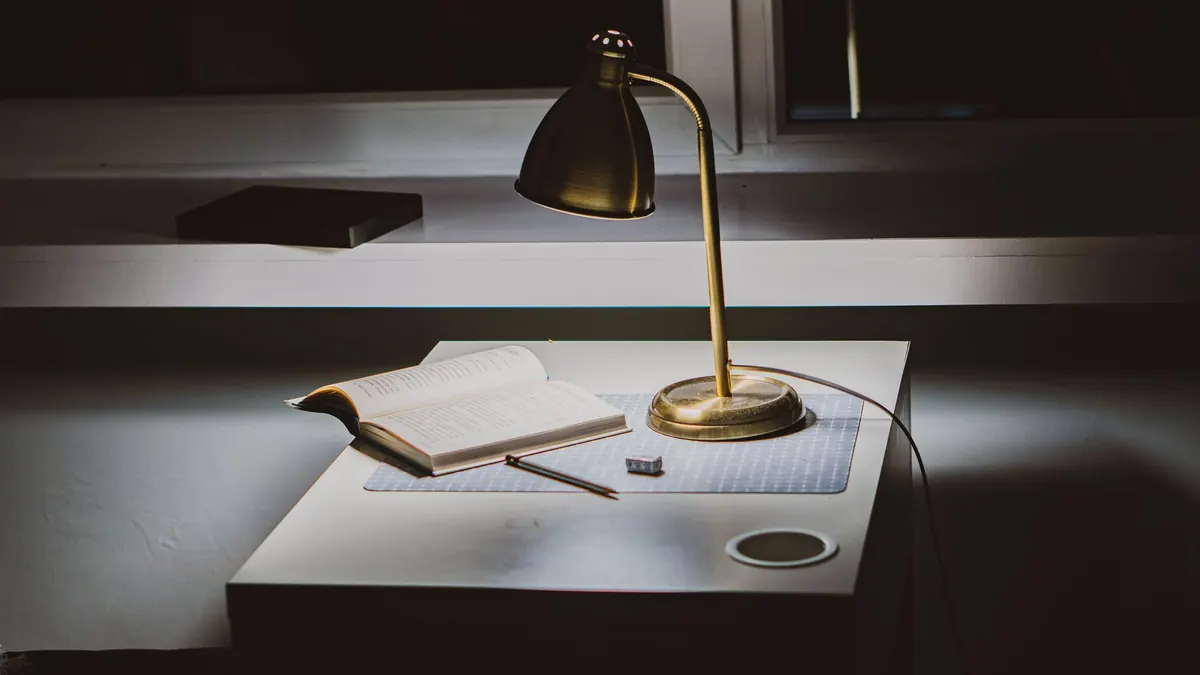
Most rooms have a light switch, not a lighting plan. You flip it, a ceiling fixture glows, and the space turns out fine — flat, a little gray in the corners, and oddly harsh above the sofa. The fix usually isn't a bigger bulb. It's layering. Designers sort light into three jobs: task, ambient, and accent. Once you can tell them apart, you can walk into any room and spot immediately which one is missing.
The Three Layers, in Plain Terms
Every light in your home is doing one of three things, whether or not anyone planned it that way.
- Task lighting helps you see what your hands are doing: reading, chopping vegetables, shaving, sewing, sorting mail.
- Ambient lighting fills the room so you can move through it safely and comfortably. This is the base layer.
- Accent lighting creates highlights — a wash on a textured wall, a glow behind a plant, a pool of light on a painting.
A single fixture can serve more than one purpose. A dining room chandelier is ambient when it's bright and becomes atmosphere when it's dimmed. A floor lamp behind a chair is ambient for the room and task light for whoever sits there with a book. What matters is knowing which job you're asking a fixture to do, and noticing when a room needs a job nobody has assigned yet.
Task Lighting: Light That Helps You Do Something
Task light is about direction and control, not raw brightness. A modest bulb in a well-shaded lamp aimed at a book page beats a much stronger bulb on the ceiling, because the light lands where the work is instead of scattering across the whole room.
Good task lighting shows up in predictable places: a swing-arm lamp beside a reading chair, LED strips under kitchen cabinets, a pendant over an island, sconces flanking a bathroom mirror, a desk lamp positioned just off to one side. The kitchen version is the one people notice most. Under-cabinet strips make chopping on a counter feel dramatically easier, and they cost less than most people expect.
A few checks worth running on any task light:
- Shadow test. Sit or stand the way you'd actually use the light. If your own body casts a shadow across the page or the cutting board, move the fixture to the side rather than cranking up the wattage.
- Can you see the bulb? If the bare bulb is in your eyeline, the shade isn't doing its job. Reposition it, add a diffuser, or pick a shade with a wider lip.
- Is it adjustable? A head that tilts or an arm that swings means the light can follow the task instead of the other way around.
Color temperature matters here too. Kitchen counters and desks often feel better with a slightly cooler white, somewhere around 3000K to 4000K, which reads crisp and makes detail easier to see. Bedside reading is usually more comfortable on the warm side. Comfort beats theory, so trust your eyes.
Ambient Lighting: The Layer You Live In
Ambient light is the general wash that lets you cross a room without feeling your way along the furniture. Ceiling fixtures, recessed cans, a chandelier, cove lighting, and floor lamps that bounce light off the ceiling all count. Ambient is judged mostly by what it doesn't do: no hard shadows, no glare bouncing off a television or laptop screen, no dark corner where someone stubs a toe on the way to bed.
Warm white, roughly 2700K to 3000K, suits living spaces. And if you change one thing about your ambient layer, make it a dimmer. A dimmable ceiling fixture gives you a bright, functional room in the morning and a soft one after dark without touching another switch.
The most common ambient mistake is treating one central fixture as the whole layer. A single bright point in the middle of a ceiling lights the middle of the floor and not much else, leaving the walls and corners to fall away into gloom. Two or three softer sources spread around the perimeter usually read far better than one strong one in the center.
Accent Lighting: The Layer That Gives the Eye Somewhere to Go
Accent lighting is the layer most homes skip, and it's the one that makes a room look finished rather than merely furnished. It doesn't need to be bright. It needs to be noticeably brighter than the surface around it, so the object it hits reads as a highlight instead of blending into the wall.
Think picture lights over artwork, small spots washing a stone fireplace, an uplight tucked behind a large plant, a strip of LED hidden under a shelf lip, a low lamp glowing on a bookshelf at night. Three habits keep accent light from looking amateurish: aim the beam at the object rather than at anyone's eyes, keep the source itself out of sight, and leave parts of the room darker than others. Contrast is the entire point. A room lit evenly from wall to wall has no visual hierarchy, and the eye has nowhere to land.
Combining All Three in One Room
Rooms rarely need equal amounts of each layer. A home office leans heavily on task light, a dining room on ambient with a little accent, a hallway on ambient alone. Here's how the layers tend to divide up in three common rooms.
Living Room
Ambient comes from a ceiling fixture on a dimmer plus a floor lamp that throws light upward. Task comes from a reading lamp beside each seat you actually use. Accent comes from one or two small sources: a picture light on the largest piece of art, or a lamp on a console table that lights a plant from below.
Kitchen
Ambient from recessed cans or pendants, task from under-cabinet strips on the counters, accent inside glass-front cabinets or above open shelving. Those last two are small jobs, and skipping them is why so many kitchens feel bright in the middle and dark where you work.
Bedroom
Ambient from a dimmed ceiling fixture or two bedside lamps, task from a reading light with an adjustable head, and accent behind a headboard or on a dresser. Keep the reading switch within arm's reach of the pillow, or you'll stop using it.
Small Mistakes That Flatten a Room
- Mixing color temperatures in one sightline. A cool white ceiling bulb with warm lamps on either side looks wrong, even to people who can't say why. Pick one temperature and stay with it.
- Lamps that are too small or sit too low. For a table lamp used while seated, the bottom of the shade should land near eye level. Lower than that and you're staring into the bulb.
- No dimming anywhere. Bright is a setting, not a personality.
- Accent lights aimed at people. If you can see the fixture or the beam, the effect is gone.
- Every source mounted on the ceiling. Light only from above flattens faces and furniture alike.
Start With the Layer You're Missing
Stand in the doorway of a room you use most, at night, with only the lights you'd normally switch on. Look for the two extremes: the brightest glare and the darkest corner. Whichever problem you notice first tells you which layer to add.
If the room feels flat and unfinished, add accent — one small light aimed at something worth looking at. If you find yourself squinting or leaning forward, add task. If it feels like a waiting room, dim what you have and bring in two lamps at different heights so the light comes from more than one direction.
Then stop. Buy one lamp this month, place it where you actually sit, put a warm bulb in it, and plug it into a dimmer switch. Live with it for a week before you buy anything else, because layering is iterative and your own habits will tell you more than any formula. Do keep an eye on practicalities while you're at it: don't chain extension cords together or overload a single outlet, and follow the manufacturer's guidance on bulbs and wattage for each fixture. Good light is built one layer at a time, and most rooms only need one more.
Photo: Yury Rymko / Pexels